
Blog
Fallen Trees in Wellington After Storms - Who's Responsible, What's Safe, and When to Call an Arborist
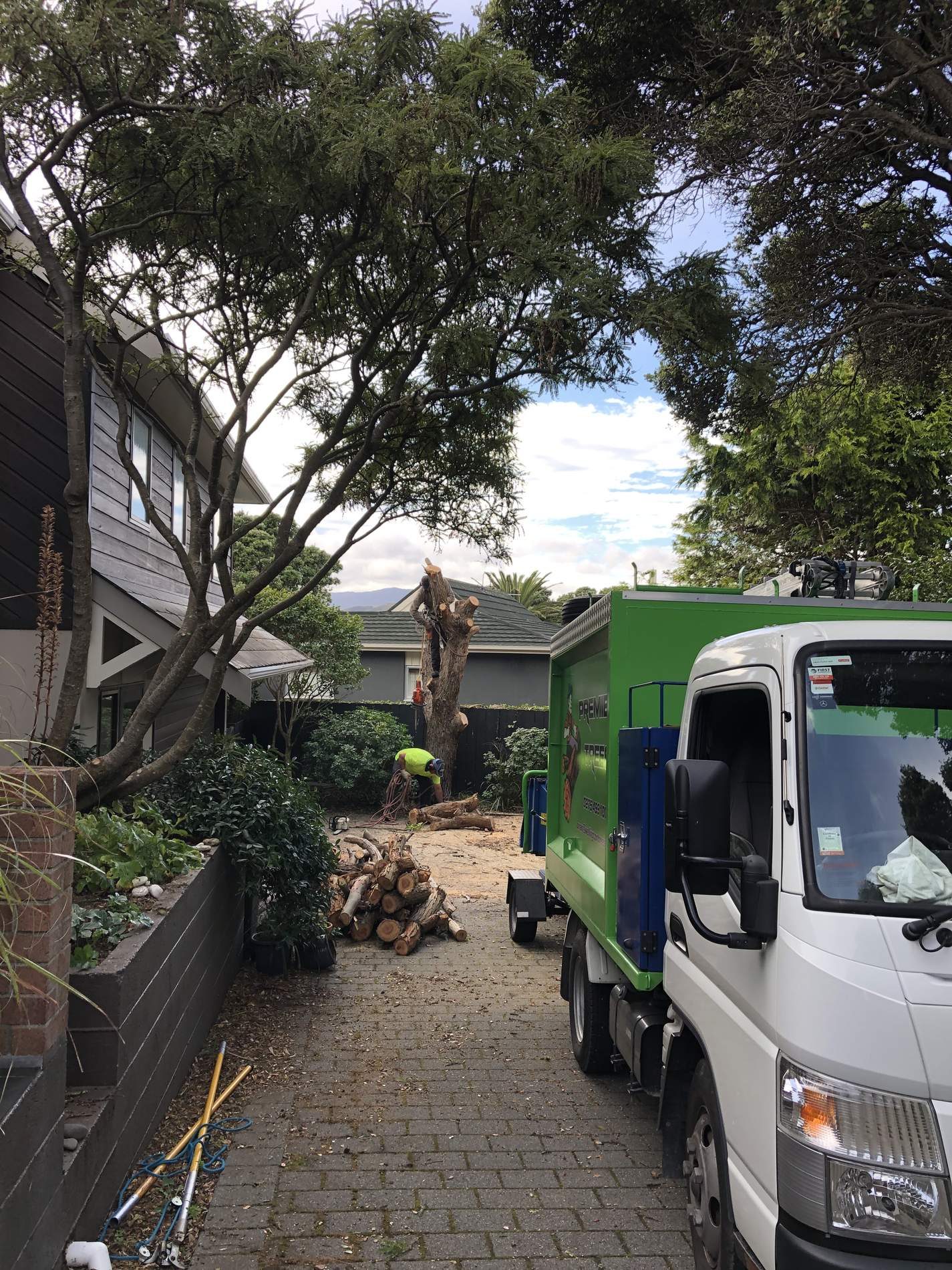
In Wellington, it doesn't take much for a windy front or a big southerly to turn a normal day into a mess of branches, blocked driveways, and damaged fences. After a storm, searches for "fallen tree removal Wellington", "tree debris removal near me", and "arborist storm clean-up" spike for a simple reason - people need access restored quickly, and they need to know what's safe to touch.
This post covers a topic that's becoming increasingly relevant in 2026: post-storm fallen trees and debris clean-up. Not the dramatic, obvious emergency removals (that's its own category), but the more common reality Wellington residents face - trees down across tracks, limbs hanging over driveways, half-failed trunks resting on fences, and "looks fine but feels risky" situations that can catch people out.
First things first - what to do in the first 10 minutes
After any storm event, it's normal to want to get straight in there with a saw and "just deal with it". In Wellington, that instinct can be expensive - or dangerous - because a fallen tree is rarely stable. What looks like a tree simply lying on the ground can be under major tension (compressed fibres, loaded limbs, twisted trunks), especially if it's pinned on a bank, caught in other trees, or resting against structures.
A safer approach:
- Check for live hazards before you approach. Look for power lines, broken service leads, leaning poles, or branches tangled near overhead lines. If there's any doubt, keep well clear and call the network or an arborist trained to work near lines.
- Keep people away from the drop zone. Kids and pets treat fallen trees like playground equipment. The problem is, branches can roll, slip, or spring back.
- Treat anything hanging as "still falling". Partially broken limbs - sometimes called "widow makers" - can come down long after the storm has passed.
- Photograph the scene. A quick set of photos helps with insurance, neighbour discussions, and documenting pre-existing decay or failure points.
Wellington City Council has also warned about storm damage and the risks around fallen trees in affected areas, especially where clean-up work is underway.
The Wellington reality - fallen trees aren't always "your job", but they can still be your problem
One of the most searched questions after storms is essentially: "Who's responsible for removing this tree?"
The answer depends on where the tree sits and who owns the land it came from.
Trees on your private property
If the tree is on your land and it fails, you're typically responsible for making it safe and arranging removal. Even when a tree has fallen "away from your house", it can still create liability if it's blocking access, damaging a shared boundary, or presenting an ongoing hazard (like a trunk hung up on another tree).
Wellington City Council provides guidance on what you can and can't do with trees, including situations involving protected trees and process expectations.
Trees on council land, reserves, or street berms
If a tree has fallen on council-managed land, councils will generally coordinate response - but they also triage. That means high-risk public safety issues and key access routes are prioritised, while smaller debris may take longer. This is why many Wellington homeowners end up arranging private arborist help anyway, especially if a fallen tree affects their driveway, boundary access, or immediate safety.
Trees straddling boundaries
This is where things get messy quickly. A tree might have grown on one property but fallen onto another, or a trunk might be on the boundary line with roots on one side and canopy overhanging the other. In practice, the fastest path is usually to focus on safety first (make the site safe), then sort the cost discussion afterwards with clear photos and a written summary from an arborist if needed.
Why fallen trees in Wellington are often more dangerous than they look
Wellington's terrain adds complexity. On flat sections, a fallen tree generally settles. On slopes, it can shift. Add saturated ground, clay soils, and hillside properties, and you get logs that roll, root plates that continue to lift, and partially failed trees that don't finish failing until days later.
Common Wellington-specific failure patterns include:
- Root plate failure (tree tips with a big disc of roots and soil attached) after prolonged wet ground
- Trunk shear (snap partway up) in older trees with internal decay
- Limb tear-out where heavy lateral branches twist out of the main stem during gusts
- Chain reaction failures where one tree falls into another, loading it up and causing delayed failure later
This is why "just cut it up" can be a trap. Professional arborists don't just cut - they control the forces, reduce the load safely, and dismantle pieces in a way that doesn't turn a tidy-up into an injury.
What you can realistically do yourself (and what you shouldn't)
There's a sensible middle ground between "touch nothing" and "hire someone for every twig".
Usually OK for homeowners (if no power lines and no instability):
- Picking up light branches and stacking them
- Raking leaves and smaller debris
- Cutting and bundling very small limbs (think: what one person can lift without strain)
- Keeping drains and gutters clear to prevent flooding around foundations
Usually not worth the risk:
- Cutting limbs under tension (they can whip, roll, or kick back)
- Cutting trunks resting on fences, roofs, vehicles, or retaining walls
- Working on a ladder near broken canopy
- Anything within reach or fall distance of power lines
- Removing a hung-up tree (where the trunk is suspended in other trees)
If you're unsure, a good arborist can do a quick on-site safety assessment and give you a plan - sometimes the safest option is partial removal plus monitoring, rather than an all-or-nothing approach.
The "storm clean-up" service that people forget to ask for
A trend we're seeing in 2026 is property owners searching for "tree debris removal Wellington" rather than "tree removal" - because the real problem after a storm is the volume of mess.
A professional storm clean-up can include:
- Cutting and stacking manageable firewood lengths
- Chipping branches for mulch or removal
- Clearing accessways, driveways, and footpaths
- Removing stumps or low trunks that are trip hazards
- Identifying nearby trees that are now compromised (often the hidden risk)
That last point matters. A storm can partially damage a tree without it falling. The tree remains standing, but with cracked unions, split leaders, or root damage that shows up later. A quick inspection after the obvious debris is cleared can prevent the "second incident" that happens on a calm day two weeks later.
When you should call an arborist straight away
You'll want professional help immediately if:
- Any part of the tree is near power lines or service leads
- The tree is resting on a structure (roof, fence, retaining wall, vehicle)
- A trunk is suspended or tangled in other trees
- The root plate has lifted and is still moving
- The tree is blocking access and needs controlled dismantling
- There are signs another nearby tree is now unstable
The goal isn't to overreact - it's to avoid turning a clean-up into a hazard.
A practical next step for Wellington property owners
If you've had storm damage recently, the best move is usually:
- Make the area safe and restrict access
- Clear only what you can safely handle on the ground
- Get a professional arborist to assess anything loaded, elevated, or near structures
- Consider a short post-storm inspection of nearby trees to catch hidden damage early
For anyone wanting to understand the local rules and expectations around pruning and removing trees, Wellington City Council's guidance is a useful starting point.
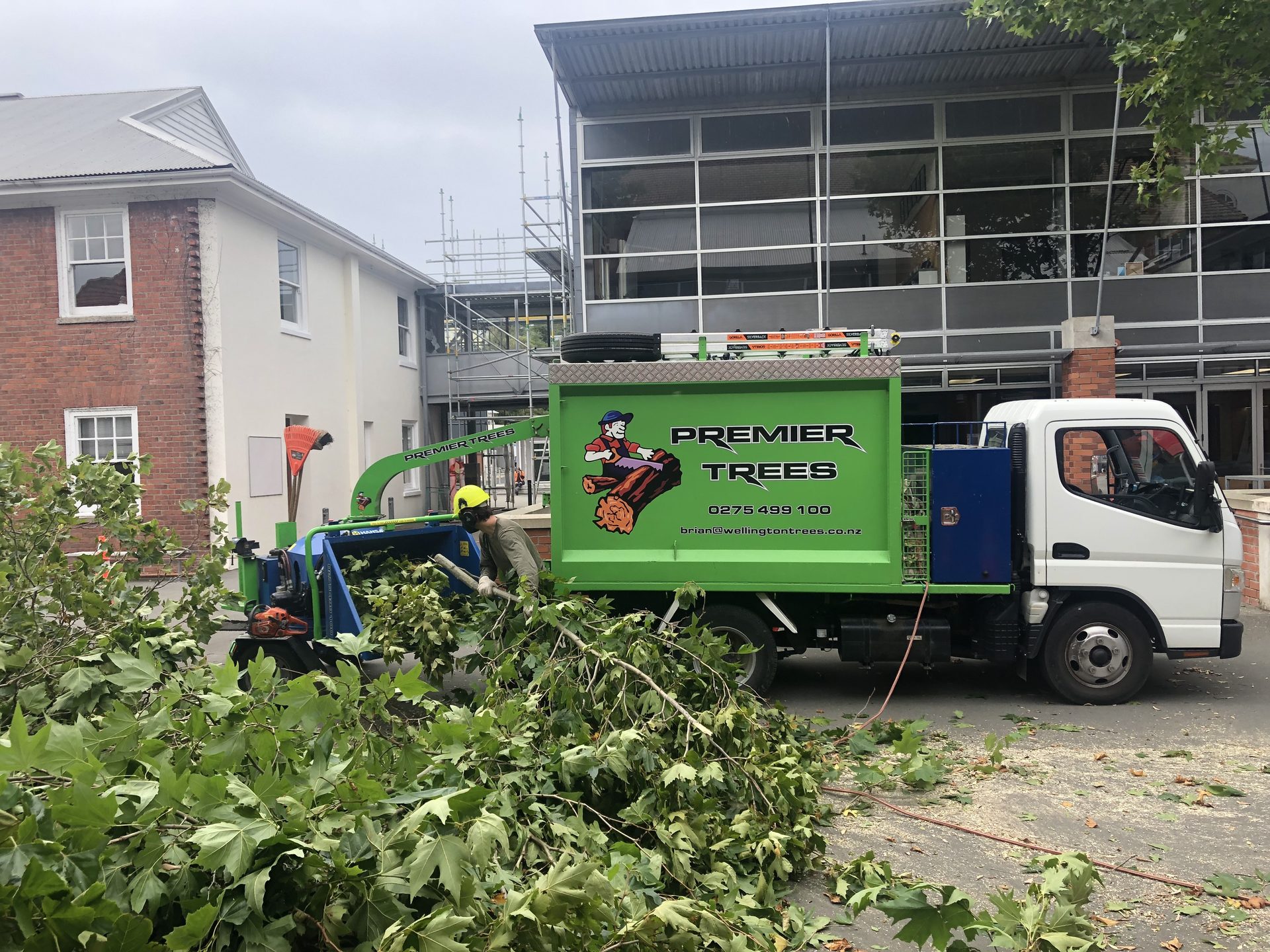
Reach out to Premier Trees today for a free, no-obligation quote.
Why risk your own safety when professional help is just a call away?
Free quotes
Contact us
Tell us roughly how tall the tree is, where it stands, what is underneath it and whether the job is urgent.
0275 499 100- Karori, Wellington
- brian@wellingtontrees.co.nz